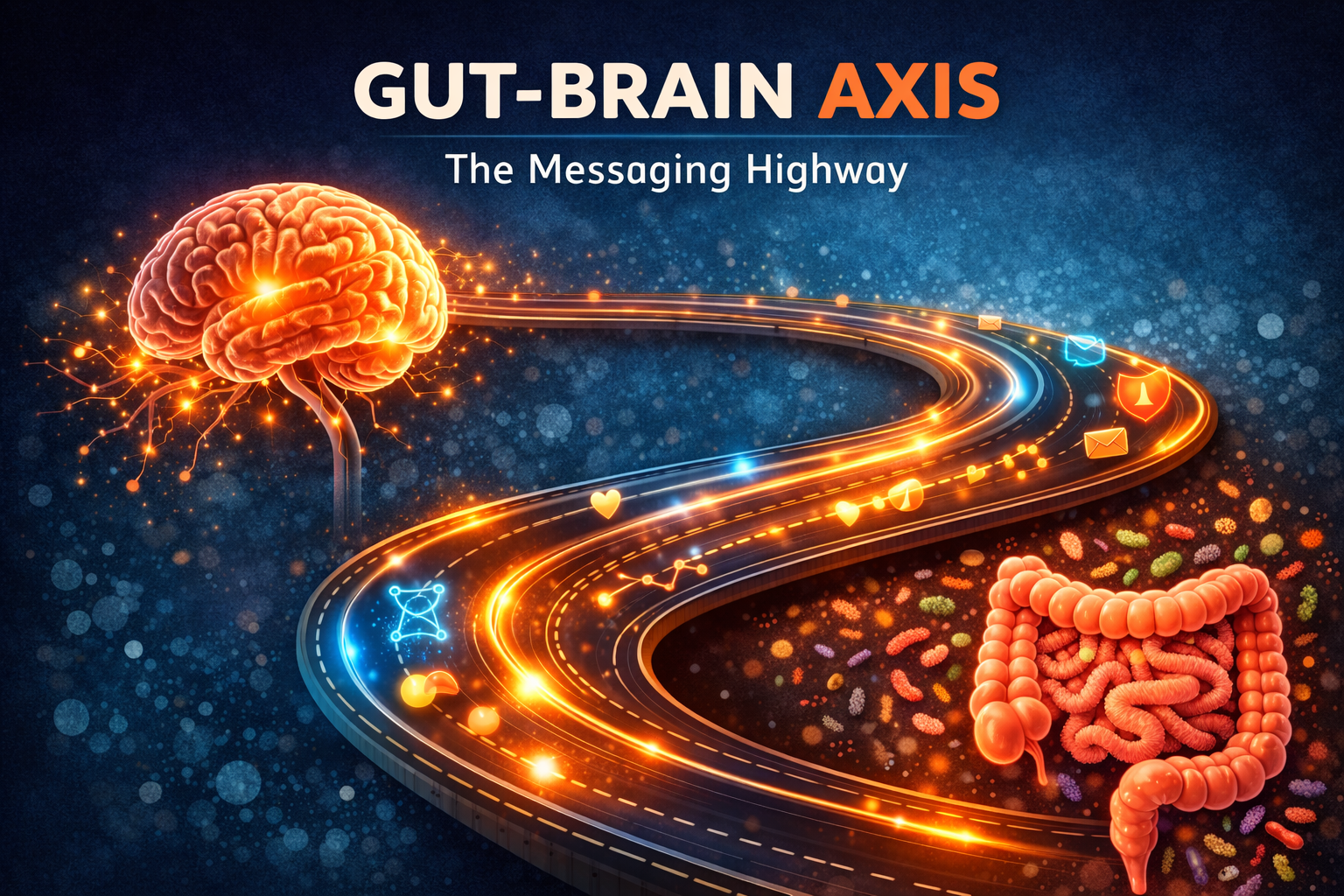
Most of us are familiar with the “butterflies in the stomach” feeling before a big event, but what if that connection between your gut and your brain goes far deeper than a moment of nerves? Emerging research over the past decade has revealed a powerful communication system between the gut, its resident microbes (microbiota), and the brain that plays an important role in emotional regulation, stress responses and, for many people, anxiety.(1) This connection, known as the ‘microbiota-gut-brain axis’ is now considered a powerful contributor to overall mental health, with research indicating its involvement in generalised anxiety disorder.(2)
In this article we’ll unpack how the gut microbiome and brain communicate, explore what research says about the microbiome’s role in anxiety, and explain why personalised gut microbiome testing can provide insights that help you understand your nervous system better, especially when anxiety feels hard to pin down.
What Is the Microbiota-Gut-Brain Axis?
The microbiota-gut-brain axis is a complex network of communication pathways, think of it like a busy motorway, linking the central nervous system, the digestive system, and the microbes inhabiting it.(3) It involves:
- the vagus nerve, a major nerve connecting the gut and brain
- neurotransmitters produced in the gut
- immune-signalling
- hormones
- metabolic by-products released by certain gut microbes
This three-way dialogue means the brain affects digestion and gut function, and the gut and microbiota can influence brain activity, mood, and stress responses.(4)
How the Microbiome Influences Anxiety
The microbiome plays a key role in shaping this communication. Research has shown that:
1. Microbial Imbalance Is Linked with Anxiety
Studies comparing people with anxiety disorders to healthy controls have found differences in the gut microbiome composition: those with anxiety tend to have altered abundance of certain bacterial groups and lower overall microbial diversity, while others show increases in species that may promote inflammation. These imbalances are often referred to as ‘dysbiosis’(5)
2. Microbes Help Produce Mood-Related Chemicals
Certain bacteria can influence neurotransmitters like:
- GABA, which helps regulate anxious feelings
- Serotonin, important for mood and wellbeing
- Dopamine and glutamate, involved in reward and stress pathways
These microbial-derived metabolites can influence how the nervous system responds to stress and emotional signals.(6)
3. Stress and Dysbiosis Can Feed Each Other
Chronic stress can alter gut bacteria, and those changes in turn can influence stress responses in the brain, creating a cycle of interaction that can make anxiety feel persistent.(7)
Why Anxiety May Feel “Hidden” or Hard to Explain
Anxiety linked to gut function can feel elusive because:
- Symptoms are not always digestive — they may be emotional, cognitive or physiological
- Standard tests often focus on psychological or neurological causes
- Historically, mental and digestive health have been considered as separate, but now emerging research reveals they are intrinsically connected.
Gut-related anxiety doesn’t mean that someone’s emotional experience isn’t real or valid — it simply reflects a complex interplay of systems that go beyond the brain alone.(4)
Signs Your Anxiety Could Be Linked to Gut Health
No single symptom “proves” a microbiota-gut–brain connection to anxiety. However, some patterns commonly noticed include:
- Anxiety that seems tied to eating or digestive changes
- Anxiety that fluctuates with bowel habits or IBS-like symptoms
- Feeling more anxious during or after periods of digestive imbalance
- Persistent brain fog, tension, or anxiety without a clear psychological trigger
These patterns may prompt some people to explore gut-focused insights alongside traditional mental health strategies.
Diet, Lifestyle and the Microbiome
Although the gut microbiome–anxiety relationship is an active, on-going area of research, there is emerging evidence that:
- Diet quality matters – whole-food diets rich in plants, fibres and omega-3 fats support microbial diversity linked to better mood outcomes. Processed foods and high-sugar diets tend to correlate with less diverse microbiomes and increased inflammation.(8,9)
- Stress and sleep patterns influence both brain and the gut microbiome, with chronic stress and poor sleep associated with microbiome changes that may accentuate anxiety (7,10)
- Movement, hydration, and healthy eating are important elements of a more holistic approach.
Importantly, these lifestyle factors are not replacement treatments for mental health conditions, but they may support overall well-being when used alongside professional care.
Can the Microbiome Be Tested for Insights Into Anxiety?
At Smart Nutrition we offer gut microbiome testing that can provide valuable insights about:
- overall gut microbial diversity
- whether beneficial species such as Firmucutes, Faecalibacterium, Butyricicoccus, and Eubacterium are reduced(11)
- signs of imbalance with higher amounts of anxiety-associated species such as Bacteroidetes, Enterobacteriaceae, and Fusobacterium(11)
- markers that could be relevant to metabolic, immune, and neural signalling
This kind of testing can complement your picture of well-being, highlighting patterns that might interact with mood, stress, or cognition. Combining microbiome test insights with professional guidance may help you make more informed decisions about diet, lifestyle and support strategies for anxiety.
Looking at Genetics and the Microbiome Together
While gut microbiome testing can offer valuable insight into how digestion, immunity and microbial balance may interact with mood and anxiety, it doesn’t tell the whole story on its own. This is where genetics can add an important additional layer of understanding.
Genetic testing focused on the nervous system can highlight inherited tendencies related to neurotransmitter activity, stress response, inflammation and how the body processes key nutrients involved in brain chemistry. These genetic variations don’t determine outcomes, but they may help explain why some people are more sensitive to stress, more prone to anxiety, or respond differently to lifestyle and nutritional interventions.
When genetic insights are considered alongside gut microbiome test data, a more complete and personalised picture can emerge. For example, someone may have a genetic tendency towards altered neurotransmitter balance or heightened stress reactivity, combined with a gut microbiome profile that suggests reduced microbial diversity or imbalances linked to inflammation. Together, these insights can help guide more focused, individualised support, rather than a one-size-fits-all approach.
This combined approach can help individuals and practitioners better understand underlying biological influences that may contribute to how the nervous system and gut interact, supporting more tailored lifestyle, dietary and well-being strategies.
Emerging Research and Personalised Possibilities
Clinical research on microbiome-focused interventions for anxiety is still growing. Reviews suggest that strategies like prebiotics, probiotics, and improved dietary patterns may positively influence anxiety and mood, but results are not yet strong enough to replace established therapies.(1)
That said, personalised microbiome testing can:
- help identify unique microbial patterns
- reveal opportunities for dietary and lifestyle adjustments
- provide context for gut-brain interactions that traditional symptom checklists may miss
As research continues, this area holds promise for supporting people who experience anxiety that seems intertwined with gut health.
Supporting Your Anxiety Journey
If your anxiety feels connected to your digestive system, or doesn’t seem to have a specific trigger, here are supportive steps many people find useful:
- Track symptoms and patterns alongside meals and stressors
- Prioritise gut-supportive foods such as vegetables, legumes, fermented foods and fibre
- Work with health professionals who understand both mental and gut health
- Consider microbiome (and genetic) testing if your story feels complex or unexplained
Remember, anxiety is multifactorial — influenced by genetics, environment, psychological stress, lifestyle and biology. Gut health is one piece of the puzzle, but it can be a meaningful one.
Final Thoughts
Your gut and brain are in constant conversation — through nerves, hormones, immune signals and neurotransmitters. This connection doesn’t mean gut health alone causes anxiety, but it does mean there’s a biological network of influences worth exploring if your symptoms feel elusive.
Microbiome science is rapidly evolving, and while we’re still uncovering the full picture, early research and clinical experience both suggest that understanding your gut ecosystem can offer helpful context for anxiety and emotional wellbeing.
If you’re curious about where your own microbiota-gut–brain axis stands, and whether it may be involved in your personal anxiety picture, Smart Nutrition’s gut microbiome and genetic nervous system tests can provide a personalised starting point to explore how your microbes (and genes) may be part of your anxiety story.
FAQ
Q. Can gut health really influence anxiety?
Research suggests there is a strong connection between the gut and the brain. The gut microbiome helps influence neurotransmitters, immune signals and stress responses, which may affect how some people experience anxiety. This doesn’t mean gut health is the only factor, but it can be an important piece of the puzzle.
Q. Does this mean my anxiety is “all in my gut”?
No. Anxiety is complex and influenced by many factors, including life stress, psychology, genetics, hormones and biology. Gut health doesn’t replace these factors, but it may help explain why symptoms feel persistent or fluctuate — particularly if digestive symptoms are also present.
Q. How could microbiome testing help someone with anxiety?
Gut microbiome testing doesn’t diagnose anxiety, but it can provide insight into digestive balance, inflammation markers and microbial diversity. For some people, this information helps guide supportive lifestyle or nutrition changes alongside other support.
Q. Why might genetics be useful to look at alongside gut testing?
Genetic testing can highlight inherited tendencies related to stress response, neurotransmitter activity and nutrient metabolism. When combined with gut microbiome data, it can offer a more personalised picture of how the nervous system and gut interact, helping to guide more individualised support strategies.
Q. If anxiety is linked to gut health, can it be improved?
Many people find that supporting gut health through diet, stress management, sleep and lifestyle changes can positively influence how they feel over time. While this isn’t a replacement for medical or psychological care, it may be a helpful complementary approach for some individuals.
References
1. https://pubmed.ncbi.nlm.nih.gov/40454495/
2. https://pubmed.ncbi.nlm.nih.gov/40221592/
3. https://doi.org/10.3389/fnana.2025.1504065
4. https://pubmed.ncbi.nlm.nih.gov/33712947/
5. https://doi.org/10.1016/j.cpr.2020.101943
6. https://pubmed.ncbi.nlm.nih.gov/38306525/
7. https://pubmed.ncbi.nlm.nih.gov/40222779/
8. https://doi.org/10.3389/fnut.2024.1346483
9. https://pmc.ncbi.nlm.nih.gov/articles/PMC11509786/
10. https://doi.org/10.3389/fpsyt.2018.00669
11. https://doi.org/10.1186/s12888-025-06871-8